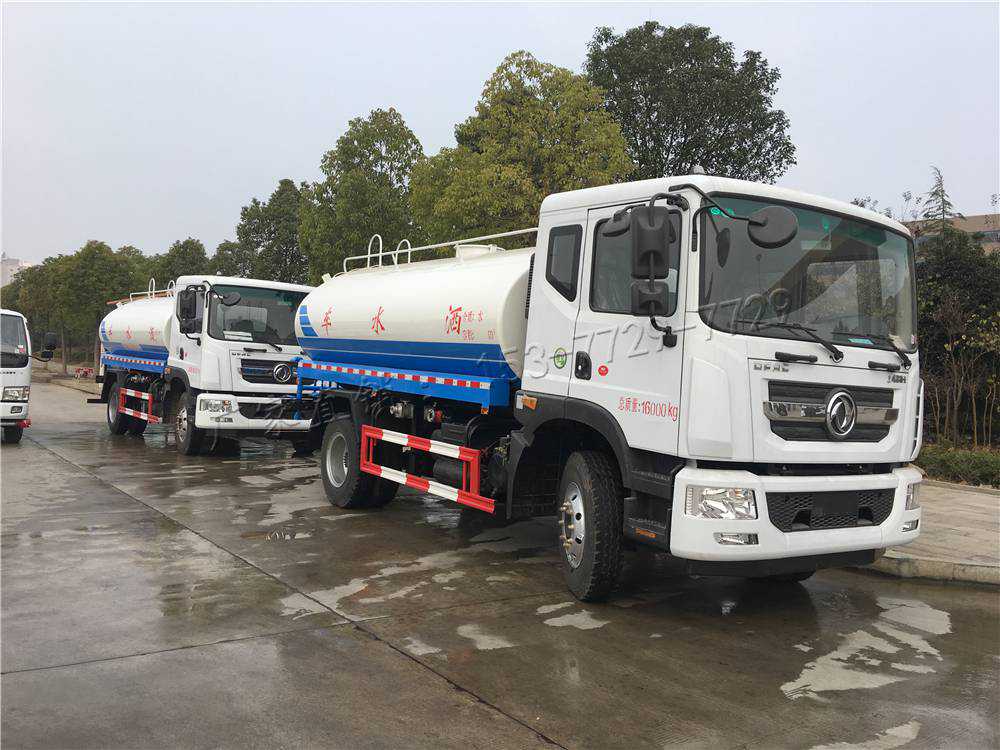
There is nothing worse than pulling up to a dusty construction site or a compactor ready to roll, engaging your PTO, and watching your cannon dribble out a pathetic stream of water. It kills your schedule, it embarrasses your driver, and if you aren’t careful, it’s about to kill your budget.
In my years managing heavy equipment, I’ve seen operators immediately blame the “bad pump.” But here is the reality: 90% of the time, the pump is fine. The problem is usually physics, airflow, or bad habits. Before you order a $1,500 replacement part, let’s walk through what is actually happening inside your hydraulic system.
The Usual Suspects: It’s Usually Air, Not Steel
First, we need to talk about the “RPM Sweet Spot.” I see rookie drivers cranking the engine to the redline thinking more engine speed equals more water pressure. This is dead wrong. High RPMs during the initial engagement act like a hammer on your seals.
Based on standard PTO engineering, you should engage your system at an idle—under 1,000 RPM. Once engaged, your working range should be smooth. If you are shutting off the flow, you must drop those RPMs back down to 1,000–1,200 range. Why? Because if you slam a valve shut while the engine is screaming at 2,000 RPM, the water hammer effect has nowhere to go but back into your pump seals.
Next, check your suction line. A water pump is essentially a vacuum creator. If your inlet hose has even a pinhole leak or a loose clamp, the pump will suck air instead of water because air is lighter. I always tell my guys: “If it leaks water out when it’s off, it’s sucking air in when it’s on.” Tighten every clamp on the intake side before you do anything else.
Mechanical Diagnostics: When to Worry
If your habits are good and the hoses are tight, then we look at the metal.
1. Check the Drivetrain: Crawl under the truck. Is the drive shaft from the PTO to the pump actually spinning? I’ve seen sheared keys on the shaft where the PTO spins, but the pump shaft stands still.
2. The “Gravel” Test: Start the pump and stand next to it. If it sounds like someone threw a handful of gravel into a blender, that is the sound of cavitation. This means the impeller inside is pitted or broken, usually from running dry.
The “Hidden” Culprit: The Dry Run Sin
This is the number one killer of water pumps. Ceramic mechanical seals rely on the water itself for lubrication and cooling. If an operator runs the pump “dry” for even 60 seconds while waiting for a fill, the friction heats those seals until they crack. Once they crack, you lose the vacuum seal, and you lose your pressure.
Don’t just swap parts; diagnose the system. Replacing a seal kit costs me about $50 and an hour of labor. Replacing a whole pump because of ignored cavitation costs over $1,500 plus downtime. Regular pressure testing isn’t just paperwork; it’s profit protection.