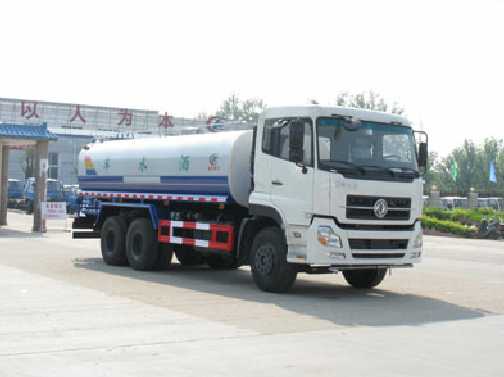
There are few things more frustrating on a job site than a water truck that refuses to pump, especially when dust control is critical during the dry season. If you are experiencing a loss of pressure or the pump simply won't engage, the issue often comes down to a few specific operational or mechanical faults.
Here is a guide to troubleshooting the most common reasons your water truck pump lacks pressure, based on expert advice from Peterbilt and STG Global.
1. The PTO is Not Engaging Correctly
The Power Take-Off (PTO) is the heart of your pumping system. If it isn't functioning, you will have zero pressure.
The "Whirring" Test: The first diagnostic step is to sit in the cab and turn on the PTO switch. You should hear a distinct "whirring" sound.
Electrical Issues: If there is silence when you flip the switch, the PTO is likely not engaging at all, which often points to an electrical problem.
Engagement Procedure: Ensure you are following the correct procedure. The PTO generally needs to be engaged while the truck is at idle.
2. Improper RPM Management
Even if the PTO engages, it can cut out if the engine speed is not managed correctly.
The RPM Limit: The PTO is designed to operate below a specific threshold, typically 1,800 RPMs. If you exceed this limit, the system protects itself by cutting out.
Driving Technique: To maintain consistent pressure while spraying, it is recommended to keep the transmission in first gear. This makes the engine speed predictable and ensures the RPMs stay high enough for pressure but low enough to prevent the PTO from disengaging.
3. Driveline Failure (Universal Joint)
If you can hear the PTO engaging (the whirring sound) but there is still no water pressure, the issue may be mechanical functionality underneath the truck.
Inspect the Tail Shaft: Safely check the underside of the truck (specifically for direct drive PTO setups) and look at the small tail shaft.
Universal Joint Issues: If the PTO is on but the shaft is not turning, power is not being transferred to the pump. This often indicates a broken universal joint.
4. Valve Misalignment
Pressure issues are frequently caused by simple human error regarding valve positions. The pump cannot build pressure if the water path is blocked or diverted.
Suction and Discharge Valves: Check your gate valves immediately. If a valve on the suction line is closed, the pump will starve; if a discharge valve is closed, pressure cannot release.
Visual Indicators: On many systems, if the valve handle is 90 degrees to the pipe, it is closed. If it is in-line with the pipe, it is open.
The "Self-Fill" Switch: Check the control panel for a "Self-Fill" or "Self-Level" switch. If this is toggled to the wrong setting (e.g., set to fill rather than spray), the system will not pressurize the spray heads.
Summary Checklist
If you have no pressure, perform these four checks in order:
Listen: Is the PTO making a whirring sound?
Look: Is the tail shaft spinning underneath the truck?
Check RPMs: Are you operating under 1,800 RPMs?
Inspect Plumbing: Are the gate valves open and is the self-fill switch in the correct position?