The Ultimate Guide to Water Truck Transmission & Clutch Care
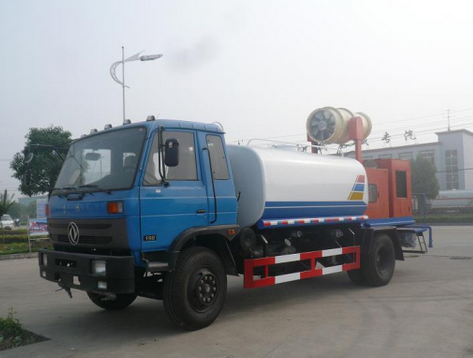
Water trucks are uniquely abusive to transmissions. Unlike a dump truck that dumps its load and drives away light, or a freight truck that cruises on the highway, a water truck is constantly starting, stopping, and shifting while carrying a “live” liquid load that sloshes back and forth. This surge puts incredible stress on your clutch and gears.
I’ve diagnosed enough “motor malfunctions” to know that the engine is rarely the problem. The problem is almost always a fried clutch caused by an operator who doesn’t understand the physics of hauling liquid.
The “Loaded Start” Technique
Let’s talk about getting this beast moving. Whether you are running a 6-speed or an 8-speed manual transmission, your gear choice matters more than you think.
Full Tank Scenario: If you are over 50% capacity, you must start in 2nd gear or lower. Period. I don’t care if you are on flat ground. Starting in too high a gear rides the clutch, heating the friction material instantly.
The Incline Rule: On a hill, you drop it to 1st. The liquid surge in the tank works against you the moment gravity takes over.
The A/C Trick: It sounds small, but if you are struggling to get moving on a hot day, turn off the air conditioning for 10 seconds. That compressor draws horsepower that your clutch needs to engage smoothly without slipping.
The Critical 3-5mm Gap: The “Million Dollar” Adjustment
This is the most technical but valuable advice I can give you. There is a specific measurement called the “separation finger gap” on your clutch assembly.
The Standard: This gap needs to be between 3mm and 5mm.
The Danger Zone: When I check fleet vehicles, I often find this gap has disappeared (0mm). When there is no gap, your release bearing is constantly riding on the pressure plate fingers. This means your clutch is technically “slipping” slightly all the time, even when your foot is off the pedal.
The Fix: You need to get under there with a feeler gauge every month. If it’s under 1mm, adjust it back to 3-4mm immediately. This five-minute check can double the life of your clutch.
Driving Smart to Save Money
Finally, let’s talk about RPM management again. Launching a water truck above 1,500 RPM doesn’t get you moving faster; it just glazes the clutch disc. High RPM slippage creates a glass-smooth surface on the clutch lining, which reduces friction and leads to failure.
Also, use your “Multi-State Switch.” Most modern heavy-duty chassis have an engine map switch. If you aren’t empty, keep that switch on “Full Load.” It tells the ECU to provide the torque curve necessary to move 40,000 lbs of water without stalling.