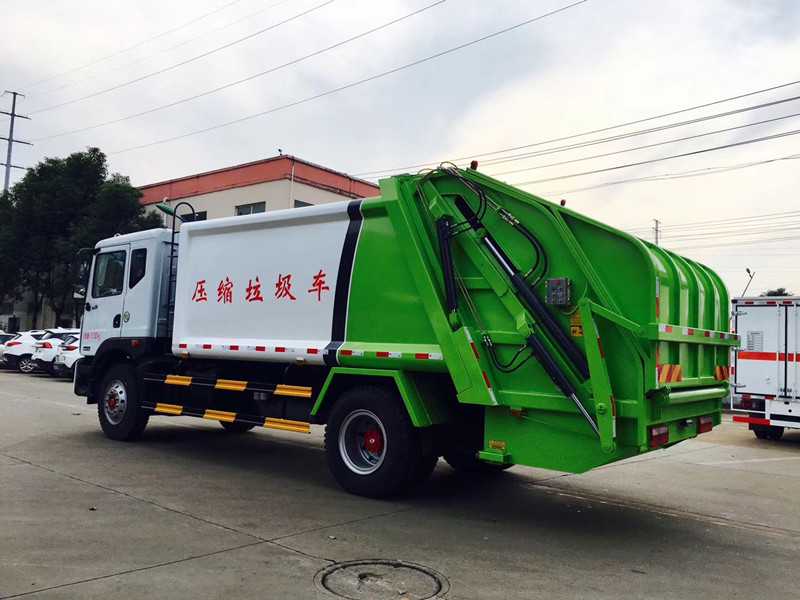
If you’ve ever had a packer stall out halfway through a route or heard a pump screaming like a jet engine, you know that hydraulic issues mean one thing: downtime. I’ve spent years under these rigs, and I can tell you that knowing how to troubleshoot garbage truck hydraulic system failures is the difference between a quick fix and a week-long headache.
In this guide, I’m going to walk you through the logic I use to diagnose these beasts, from simple safety protocols to the high-level pressure tweaks that keep your payload density on point.
Safety First: Critical Pre-Troubleshooting Protocols
Before I even touch a wrench, I follow a strict safety ritual. These machines apply massive forces through hydraulic pressure, and they don't care if you're in the way.
The Lockout/Tagout Rule
I never enter the hopper or the main body unless the engine is shut off and the key is in my pocket. It’s not just a suggestion; it’s a rule.
• Always set the parking brake and chock the wheels before you start.
• Never enter the "sump" or hopper area with the engine running—unexpected retraction could be fatal.
• Tape over the ignition and put an "OFF SERVICE" tag on the steering wheel.
Triple-Support Your Tailgate
If I have to work under a raised tailgate, I don't just trust the cylinders.
1. I use the hydraulic lift cylinders.
2. I set the mechanical safety props to lean against the body base.
3. I add shop-provided mechanical blocking, like a 2-ton capacity steel horse.
Phase 1: The Basic Diagnostic Checklist
I always start with the "low-hanging fruit." You’d be surprised how many "major" failures are just a closed valve or a flipped switch.
Power and PTO Engagement
First, I check if the Power Take Off (PTO) is actually engaged.
• Look for the dash indicator light.
• If the engine won't speed up when you hit the button, I check for a blown fuse on the speed-up relay or a bad ground.
The $10,000 Mistake: The Ball Valve
One of the most expensive errors I see is starting the pump with a closed suction line.
• I always verify the shut-off valve on the hydraulic tank is fully open.
• A closed valve will cause immediate pump damage, even if the pump is turned off.
Fluid Levels and "Milky" Oil
I check the fluid level daily with the packer in the "interrupted cycle" position.
• If the oil looks milky, you've got water contamination.
• If the tank is low, I look for dirt build-up near fittings—that’s where your leaks are hiding.
Phase 2: Symptom-Based Troubleshooting
Once the basics are clear, I listen to what the truck is telling me.
Symptom: Excessive Pump Noise
All pumps make noise, but if it sounds like it's "chewing marbles," you probably have cavitation.
• Air entry: Check the suction hose connections. They can suck air in without leaking oil out.
• Fluid starvation: Is the tank breather cap clogged? If air can't get in the tank, oil can't get out.
Symptom: Slow Pack Cycle Times
A standard pack cycle for a unit like the Leach 2R-III should take about 23 to 26 seconds. If it's slower:
• I check the engine RPM. It usually needs to hit about 1400 to 1450 RPM for the pump to deliver the required flow.
• I inspect the return line filter. If the indicator is in the red zone, replace it immediately.
Symptom: Hydraulic Cylinder Drift
If your packer panel is "creeping" or won't stay home, you’re dealing with hydraulic drift.
• This usually means internal leaks in the piston seals, valves, or rod seals.
• Over time, this causes stick-slip movements that decrease the overall performance of your system.
Phase 3: Advanced Pressure Testing and Adjustment
If the symptoms persist, I get the gauge out. You'll need a gauge capable of reading at least 3000 to 4000 PSI.
Main Line Pressure Adjustment
This is the "heartbeat" of your system.
1. Install the gauge on the test coupling at the inlet cover.
2. On a standard Leach unit, the spec is 2350 +/- 50 PSI. On a Legacy 3, it’s set higher at 3250 PSI.
3. To adjust, I loosen the lock nut on the main relief cartridge and turn the screw clockwise to increase pressure.
The Sensitive "Resistance Cartridge"
This little guy controls how well your truck compacts trash.
• I’ve found that even a 1/8 turn of the adjuster screw can change the setting by 75 PSI.
• If it's set too low, your pushout panel will slide forward too fast while packing.
Expert Insight: The Hidden Failures
Here are two things the "new guys" often overlook.
The "Dieseling" Phenomenon
If you find burnt or melted seals, it might not be friction—it could be dieseling. When air is trapped in the oil and rapidly compressed (a change of just 600 PSI), it can ignite the oil/air mixture. These "micro-explosions" eat seals from the inside out. I always bleed the system at low speed after any repair to get that air out.
Secondary Port Relief Logic
Ever notice the sweep blade "unwrapping" slightly under a heavy load? That’s the Secondary Port Relief doing its job. It’s typically set high (around 3700 PSI) to protect the truck's structure from cracking when the load gets too intense. Never shim this valve—if you do, you’re just waiting for a structural failure.
Conclusion
Mastering how to troubleshoot garbage truck hydraulic system issues requires a mix of safety, observation, and precise measurement. Always start by verifying your power and fluid basics, then move into pressure testing with a calibrated gauge.
My Professional Advice: Don't wait for a failure. Implement a weekly check-out procedure where you time the pack cycle and inspect the tank breather cap. Catching a dirty filter or a small suction leak today can save you from a catastrophic pump failure tomorrow.
Next Step: Order a high-quality glycerin-filled pressure gauge (like Loadmaster P/N 0130014) and keep it in your kit. Accurate readings are the only way to know if your main relief and knockout pressures are within factory spec.