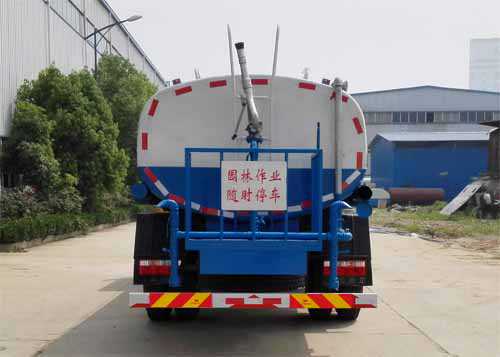
Hey there! If you’re working with heavy-duty engineering vehicles like water tankers or street washers, you know that water and electricity are a "fun" combination—and by fun, I mean potentially lethal. I've spent years looking at how these machines fail, and when the power supply of the sprinkler is short-circuited, you aren't just looking at downtime; you're looking at a serious safety event.
In this guide, I’m going to walk you through the technical "why" and "how" of diagnosing these shorts, drawing directly from the latest safety standards. Let's make sure you get that truck back on the road without anyone getting a shock.
--------------------------------------------------------------------------------
Identifying the Risk: B-Class Voltage vs. Standard Systems
Before I even touch a multimeter, I need to know what kind of voltage I’m dealing with. In the world of modern electric sprinklers, we distinguish between A-Class and B-Class voltage circuits.
• The Orange Rule: If you see a cable or wiring harness with an orange outer skin, that is a B-Class voltage circuit.
• The Threshold: B-Class voltage is anything above 60V DC or 30V AC.
• Pro Tip: If you have to remove a cover or shield to see these wires, there must be a high-voltage warning symbol (a yellow triangle with a black bolt) clearly visible.
I always tell people: if that orange wire is frayed or touching the chassis, stop immediately. You aren't just dealing with a short; you're dealing with high-voltage exposure.
--------------------------------------------------------------------------------
The Gold Standard for Diagnosis: Insulation Resistance
When I suspect a short, I don't guess. I measure the insulation resistance. This is the single most important metric for determining if a circuit has failed.
How to Measure Like a Pro
According to the safety requirements for electric vehicles, your diagnostic tool must have an internal resistance of at least 10 MΩ. Here is the breakdown of the numbers I look for:
1. For DC Circuits: The insulation resistance must be at least 100 Ω/V.
2. For AC Circuits: The requirement jumps to 500 Ω/V.
3. Combined Circuits: If your AC and DC B-Class circuits are conductively connected, the whole system must meet the higher 500 Ω/V standard.
Potential Equalization: The 0.1 Ω Threshold
I’ve seen shorts happen because the "ground" wasn't actually grounded. All exposed conductive parts (like the metal pump housing) must be connected to the electric platform.
• The resistance between any conductive part and the chassis should not exceed 0.1 Ω.
• If you can touch two different parts at the same time (within 2.5 meters of each other), the resistance between them must be under 0.2 Ω.
--------------------------------------------------------------------------------
The Hidden Culprit: Waterproofing and IP Protection
Sprinkler trucks are, by definition, wet environments. Often, the power supply of the sprinkler is short-circuited simply because the waterproofing failed. But did you know that the "required" protection changes based on where the part is mounted?
I use a height-based rule derived from the standards for high-voltage components:
• Mounted < 300mm from the ground: These parts must meet IPX7 standards (protection against temporary immersion).
• Mounted ≥ 300mm (No Shield): These need IPX5 (protection against water jets).
• Mounted ≥ 300mm (With Shield): These only need IPX3.
If you’ve got a short in a component near the road surface, check if it’s actually IPX7 rated. If it’s only IPX3, the road spray is going to kill your power supply every single time.
--------------------------------------------------------------------------------
Understanding Fault Severity: Is it a Class 1 Hazard?
Not all shorts are created equal. In our industry standards, we categorize faults into four classes. If you're dealing with an electrical short, you're likely in the "Danger Zone."
• Class 1 Fault (The Nightmare): This involves a risk to human life or could cause the "main assembly" to be scrapped. If your specialized equipment cannot be repaired within 60 minutes, it's officially a Class 1 event.
• Class 2 Fault: This is a significant drop in performance that can't be fixed with basic tools in 30 minutes.
My Advice: If your insulation monitoring system triggers an alarm (which must happen if resistance drops below 500 Ω/V for B-Class systems), treat it as a Class 1 fault until proven otherwise.
--------------------------------------------------------------------------------
Maintaining the System to Prevent Future Shorts
I've found that the best way to handle a short circuit is to never have one. Here’s what I check during every inspection:
1. Clamping and Clearance: Ensure all wiring and pipes are clamped securely and do not rub against moving parts or lean against high-temperature engine components.
2. Paint and Corrosion: Check the glossiness of the protective coating. New vehicles should have a gloss value of ≥90. Why? Because corrosion on the chassis ruins your potential equalization.
3. Storage: If the truck is going into long-term storage, you must drain all water, coolant, and fuel, and cut the power supply completely.
--------------------------------------------------------------------------------
Final Thoughts and Your Next Step
Diagnosing why the power supply of the sprinkler is short-circuited is about following the data. Whether it's a frayed orange wire in a B-Class system or an IPX5 seal that failed under pressure, the standards give you the answer.
Your Next Step (CTA): Before you do anything else, run a potential equalization test. Use a resistance tester to check the bond between your pump housing and the chassis. If that number is higher than 0.1 Ω, you've found your safety gap. Fix the ground, and you might just fix the short.
Stay safe out there!