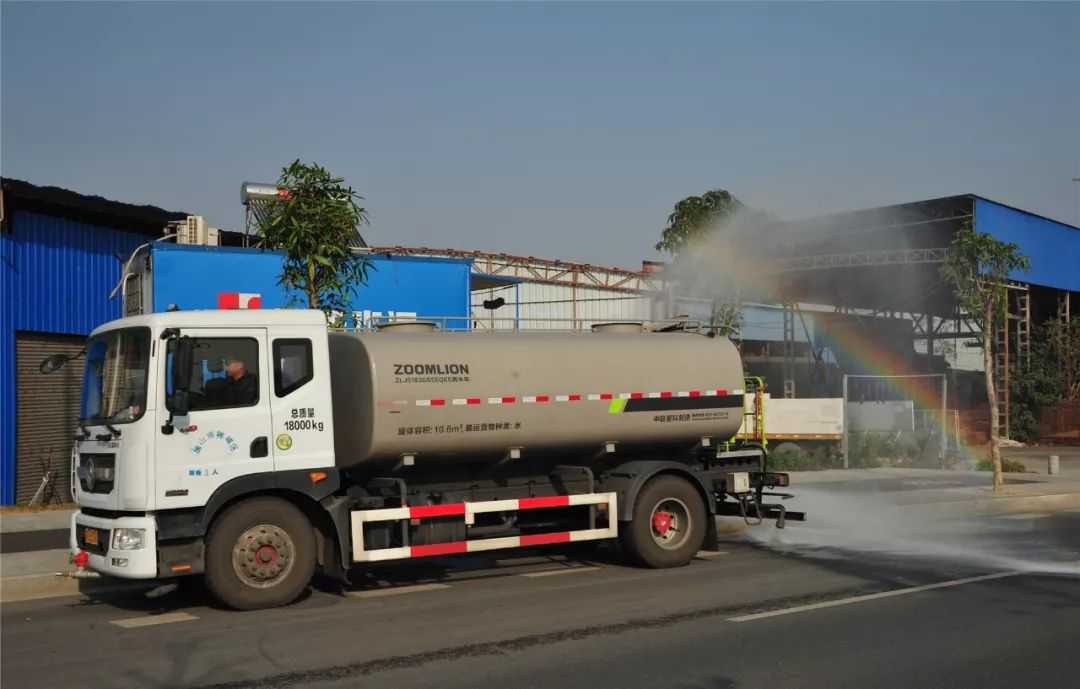
I’ve seen it a hundred times: an operator notices a small puddle under their truck and thinks, "It's just a water truck, it’s supposed to be wet." But here’s the reality—leakage in the pipeline of the water sprinkler is often the first sign of a system-wide failure.
In my ten years of auditing vehicle performance, I’ve found that a leak isn't always about a loose bolt. It’s often about a violation of engineering standards. If you want to stop the drip and keep your rig in the "90% cleanliness rate" bracket, you need to understand the physics of your pipeline.
Common Culprits: Where Does Pipeline Leakage Start?
When I start a walk-around inspection, I’m not just looking for water. I’m looking for how the pipes are "behaving." According to the T/STACAES standards, your pipeline layout is a matter of strict compliance.
1. Friction and Interference
One of the most common causes of a leak is improper clamping. The standards are very clear: oil, air, water, and electrical lines must be arranged neatly and clamped firmly.
• The Pro Rule: Pipes should not rub or interfere with moving parts.
• Heat Hazard: You must maintain a safe distance from high-temperature engine parts. If a plastic water line gets too close to the exhaust, it will soften, lose its seal, and eventually burst.
2. Corrosion and Rust-Proofing
Since these trucks live in wet environments, rust is the silent killer of pipelines. I always check if the exposed black metal surfaces have been treated with anti-rust and anti-corrosion coatings. If you see the paint peeling (a glossiness value below 85), your metal pipes are likely thinning from the outside in.
The Pro’s Diagnostic: Testing for Leaks Under Pressure
If you’ve performed a repair for leakage in the pipeline of the water sprinkler, you can't just turn the pump on and call it a day. You have to stress-test the system.
The 1.1x Rated Pressure Rule
For hydraulic systems—the ones that often power your sweeper brushes or spray bars—the standard is rigorous. You must maintain 1.1 times the rated working pressure for 10 minutes. If you see even a "sweat" of oil or water during that window, the repair has failed.
Pneumatic (Air) System Integrity
Don't forget the air lines! Many sprinklers use air-actuated valves.
• The Test: Under rated pressure, the system must hold for 5 minutes.
• The Limit: The pressure drop cannot exceed 0.05 MPa. If it drops faster than that, you have a leak that will eventually lead to a "Class 3" or "Class 2" fault.
The Danger Zone: When a Leak Becomes a "Class 1" Fault
I treat every leak with respect because, in the world of specialized vehicles, faults are categorized by their danger.
• Class 1 Fault (Fatal): If a pipeline leak involves human safety or causes a major assembly to be scrapped, it’s a Class 1 fault. For example, if a high-pressure water leak sprays onto a Class B high-voltage circuit (those orange wires), you are looking at a potential short circuit or fire.
• Class 2 Fault (Serious): This is a leak that causes a significant drop in performance and cannot be fixed with basic tools within 30 minutes.
If your specialized equipment can't be fixed within 60 minutes, the standard officially classifies it as a major failure.
Seasonal Prevention: Anti-Freeze and Drainage
I’ve found that the biggest cause of "mystery leaks" in the spring is poor winterization. Water expands when it freezes, and it will crack a pump casing or a joint without hesitation.
The standards require every water system to be equipped with a low-point anti-freeze drainage device. If you are storing the truck long-term, you must drain all water, coolant, and fuel and store it in a ventilated, dry place. This prevents the internal expansion that leads to hairline fractures in the pipeline.
Final Thoughts & Your Next Step
Maintaining your rig isn't just about topping off the tank; it's about ensuring every joint and valve can handle the pressure. Whether it's a water tanker used for dust suppression or a high-pressure road washer, leakage in the pipeline of the water sprinkler is a signal that your system is out of balance.
My Pro Recommendation (Next Step): Perform a static pressure test this week. Bring your water system up to its rated working pressure and let it sit for 10 minutes. If you see water weeping from the spray nozzles or joints, check your filters first. A clogged inlet filter often causes back-pressure that forces leaks at the weakest points of the pipeline.
Stay dry, keep the pressure up, and keep that truck in top shape!