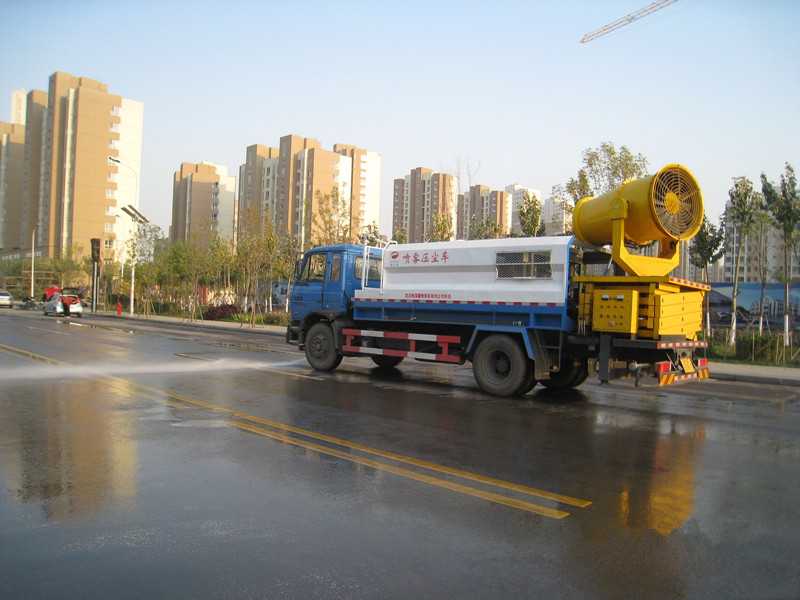
Ten years ago, a water truck was just a tank on wheels with a simple diesel engine. You could fix it with a hammer and a wrench. Today? If you treat a modern Tier 4 or Euro 6 water truck like it was built in 1990, you are going to destroy it.
Modern trucks are computers with tires. They have emission systems, complex ECUs, and sensors everywhere. As a fleet manager, I had to shift my mindset from “fix it when it breaks” to “predict when it will fail.” Here is how you need to manage a modern water truck fleet.
The Emission Systems Nightmare: DPF and DEF
The biggest killer of modern water trucks is idling. Water trucks spend a lot of time idling—waiting to fill up, waiting for the compactor, or sitting in traffic.
The Problem: Modern diesel engines with Diesel Particulate Filters (DPF) hate idling. Idling doesn’t generate enough heat to burn off the soot in the filter. This clogs the DPF.
The Consequence: Once that filter clogs, your dashboard lights up like a Christmas tree, and the engine goes into “Limp Mode” (limited to 5 mph). You now need a forced regeneration, which burns fuel and takes 45 minutes of downtime.
The Fix: Educate your drivers. If they are waiting for water for more than 5 minutes, turn the engine off. Also, never ignore the DEF (Diesel Exhaust Fluid) gauge. Running a truck dry on DEF can damage the SCR catalyst, a repair that can cost upwards of $3,000.
Advanced Spray Heads: Precision Over Power
Old school operators just want to blast water everywhere. But on a modern job site, dust control is a science.
We are moving toward automated heads and in-cab smart controls.
Why it matters: If you over-water a haul road, you turn dust into mud. Mud causes slip hazards for dump trucks and increases tire wear for the whole fleet.
The Tech: I recommend systems that adjust flow based on vehicle speed. If the truck slows down, the valve automatically restricts flow so you don’t create a puddle. This saves water (meaning fewer refill trips) and maintains the perfect soil moisture content.
The Data Advantage: OBD is Your Secret Weapon
Finally, stop guessing about maintenance. Every modern truck has an OBDII port that streams data.
I use telematics to track actual pump engagement hours, not just engine hours.
Scenario: A truck might have 1,000 engine hours, but only 200 pump hours. If you change the pump oil based on engine hours, you are wasting money. If you change it based on pump hours, you are optimizing your budget.
Predictive Maintenance: We can now see voltage irregularities in the water pump clutch before it fails. The data tells us, “Hey, the voltage spiked three times yesterday.” That’s my cue to replace the solenoid during the lunch break, rather than having the truck fail at 3 PM on a Friday.
The future of this industry belongs to the fleets that use data, not just diesel.