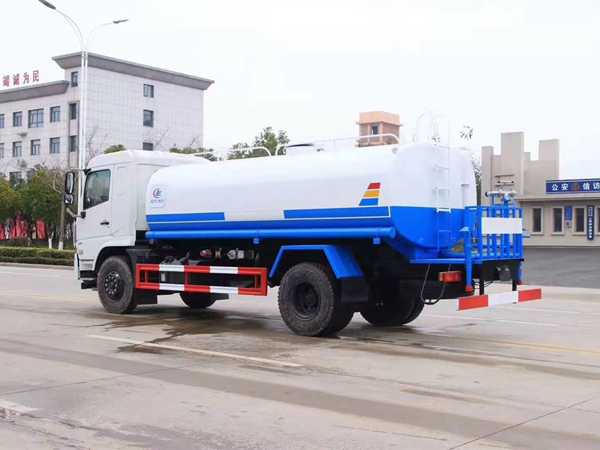
Modern water trucks are not just mechanical plumbing; they are complex electrical systems. From the chassis ECU to the spray solenoids, electrical faults can disable your rig.
1. The “Limp Mode” (Torque Limiter) Mystery
If your truck suddenly loses power and won’t rev high enough to run the pump effectively, check your dashboard for the OBD Malfunction Indicator Light (MI).
The Cause: According to heavy-duty emission standards (China IV/V/VI), if the SCR system detects a fault—such as an empty urea (DEF) tank, a disconnected NOx sensor, or poor quality reagent—the ECU will activate a Torque Limiter.
The Limitation: For many heavy-duty trucks, this limits the engine torque to 60% of its maximum, making it impossible to drive up grades with a full water tank. You cannot clear this code by disconnecting the battery; the fault must be repaired (e.g., refilling the DEF tank or replacing the nozzle).
2. Pneumatic Solenoid Valve Failure
Most modern spray systems use air-actuated ball valves controlled by electric solenoids.
The Symptom: You flip the “Front Spray” switch, but no water comes out.
Troubleshooting: Check the solenoid valve located on the frame rail. These coils often fail due to water ingress. Check the fuse in the central control box. If the fuse is good but the valve doesn’t “click,” the coil is likely burnt out. Also, ensure the system air pressure is above 0.6 MPa; otherwise, the protection valve may cut air supply to the accessories.
3. Sensor Data & OBD Diagnostics
Your truck’s diagnostic port (usually a 16-pin or 9-pin connector near the clutch pedal) allows you to read critical data.
Key Data Points: Use a generic scan tool to read Engine Speed (RPM) and System Voltage. If the alternator voltage drops below the threshold required for the ECU (often monitored by the OBD system), the truck may shut down the PTO to save power.