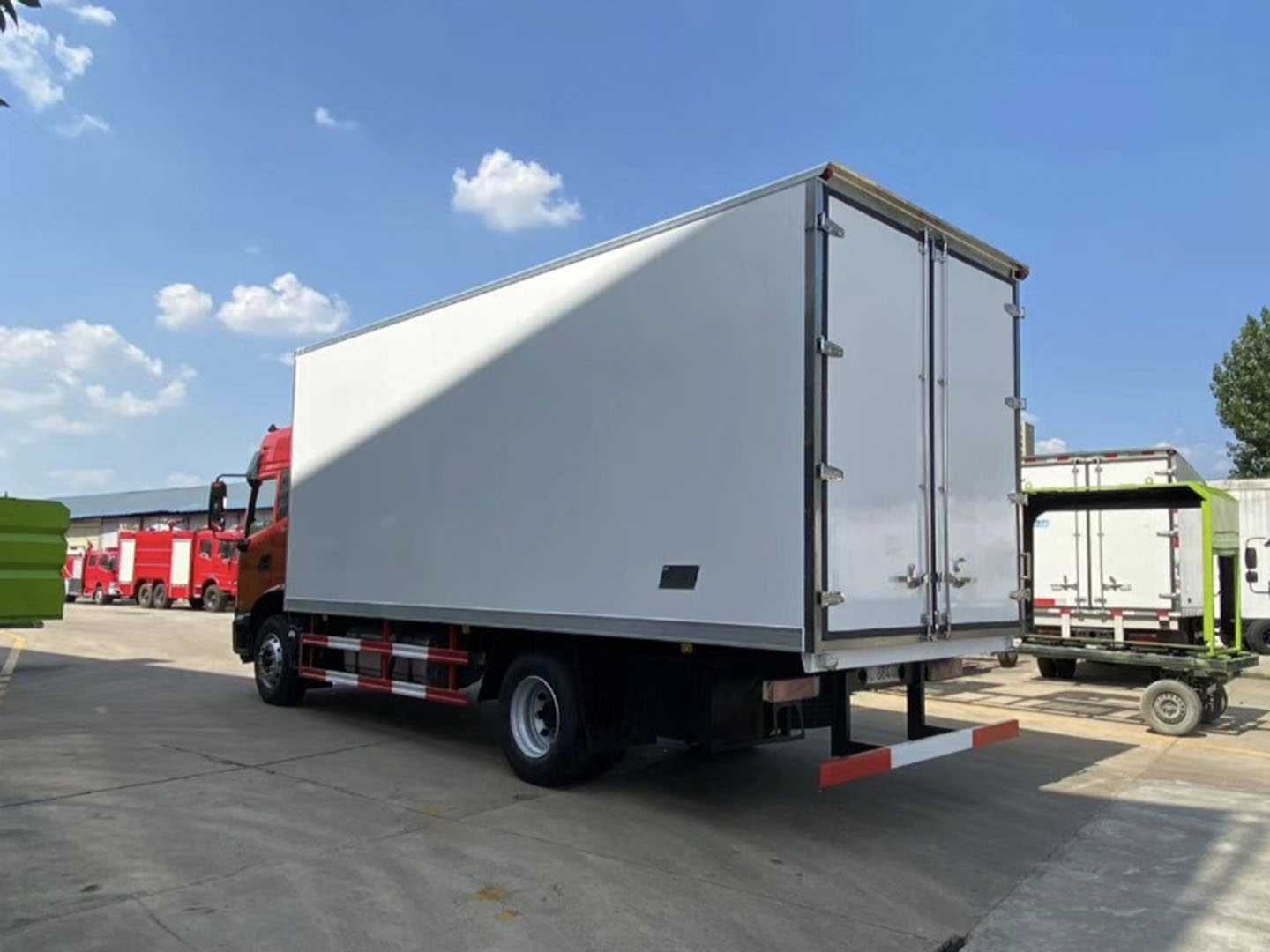
In the realm of transport refrigeration, few scenarios are as perplexing for fleet technicians as a reefer unit not cooling but compressor is running. You hear the diesel engine roaring, the belts are spinning, and the compressor clutch is engaged, yet the pull-down rate is zero, or worse, the cargo temperature continues to rise.
As a manufacturer specializing in heavy-duty cold chain components, we approach this not as a simple "breakdown," but as a thermodynamic decoupling. The system is inputting work (compressor energy) but failing to reject heat. Based on technical manuals from Carrier and Thermo King, as well as fluid dynamics research, here is an engineering breakdown of why your system is idling under load and how to diagnose the root cause.
The Thermodynamic Barrier: Refrigerant Charge & Phase Change
The most common reason for a running compressor with no cooling capacity is a lack of working fluid. The compressor moves gas, but if the liquid line is starved, the evaporator cannot absorb latent heat.
• Sight Glass Diagnosis: According to operational manuals, checking the receiver tank sight glass is the first step. If you see continuous bubbles or the glass is completely empty while the unit is in cooling mode, the system is undercharged,. Without a full column of liquid refrigerant (R-134a or R-404A) entering the expansion valve, the phase change process in the evaporator is compromised.
• The Leak Vector: Refrigerant doesn't just vanish. High-frequency vibration often fatigues the O-ring face seals at the discharge service valve or the vibrasorbers on the suction line.
Capacity Modulation Failure: The DUV/DLV Factor
Modern reefer units, such as the Carrier PrimeLINE series, utilize sophisticated capacity control known as Digital Scroll technology. They don't just run at 100%; they modulate.
• The Mechanism: These units use a Digital Unloader Valve (DUV) and sometimes a Digital Loader Valve (DLV) to control refrigerant flow by bypassing the scroll elements. In standard operation, the DUV pulses open and closed to match load demand.
• The Failure Mode: If the DUV mechanically fails in the Open position or the solenoid coil burns out, the compressor will continue to run, but it will be physically "unloaded." It is pumping refrigerant within itself rather than through the system.
• Diagnostic: You must check the controller codes (e.g., Cd01 for modulation percentage). If the controller demands 100% capacity but the suction and discharge pressures remain equalized, the modulation valve is likely stuck open.
The Flow Restriction: EEV and Filter Drier
If the refrigerant charge is sufficient and the compressor is loading correctly, the blockage lies in the liquid line.
• Electronic Expansion Valve (EEV): The EEV regulates the flow of refrigerant into the evaporator to maintain superheat. If the EEV stepper motor fails or the valve seizes in the 0% (closed) position, the compressor will pull into a deep vacuum (Low Suction Pressure alarm), and no cooling will occur,.
• Filter Drier: A saturated filter drier creates a pressure drop. A simple tactile test works here: if the outlet of the filter drier is significantly colder than the inlet, or if you see frost forming on the drier itself, it is restricted and starving the evaporator.
Airflow Short-Cycling: The Invisible Wall
Sometimes, the mechanical unit is flawless, but the aerodynamics inside the trailer are failing.
• Short-Cycling: CFD (Computational Fluid Dynamics) simulations show that improper pallet stacking can block the return air bulkhead. If the cold air discharged from the chute hits a wall of cargo and bounces directly back into the return air intake, the sensor (RTS) assumes the load is cold and throttles down the compressor, even though the rear of the trailer is hot.
• Evaporator Icing: If the unit has been running with a high moisture load (e.g., door seals leaking), the evaporator coil may freeze over. Ice acts as an insulator and blocks airflow. Even if the compressor runs, it cannot extract heat from the cargo box if air cannot pass through the coil fins. Check the Delta T (difference between supply and return air); a high Delta T (>10°C) often indicates restricted airflow.
Heat Load Intrusion: Box Insulation Failure
Finally, consider the physics of the box itself. The compressor has a maximum cooling capacity (e.g., 60,000 BTU/hr). If the heat gain from the environment exceeds this capacity, the temperature will not drop.
• Air Leakage at Speed: Research indicates that at a transport speed of 90 km/h, the external wind pressure can reach 250 Pa, forcing massive amounts of hot air through torn door seals or damaged panels,.
• Insulation Aging: Over time, the thermal conductivity of polyurethane foam increases. If the heat leakage (Q-leak) is greater than the refrigeration capacity (Q-ref), the compressor will run continuously (Code 32 - Refrigeration Capacity Low) but will fail to lower the temperature.
Conclusion
Diagnosing a reefer unit not cooling but compressor is running requires a systematic approach: check the refrigerant level, verify the loading/unloading valve status, inspect the expansion valve, and ensure airflow is unobstructed. Often, the issue is a specific component like a $50 solenoid or a clogged filter drier holding back a $30,000 piece of machinery. At our factory, we engineer our replacement components—from heavy-duty modulation valves to high-efficiency filter driers—to meet these rigorous thermodynamic demands, ensuring your fleet remains cool even in the harshest environments.